Project Launch Somalia: Education Cannot Wait (MYRP)
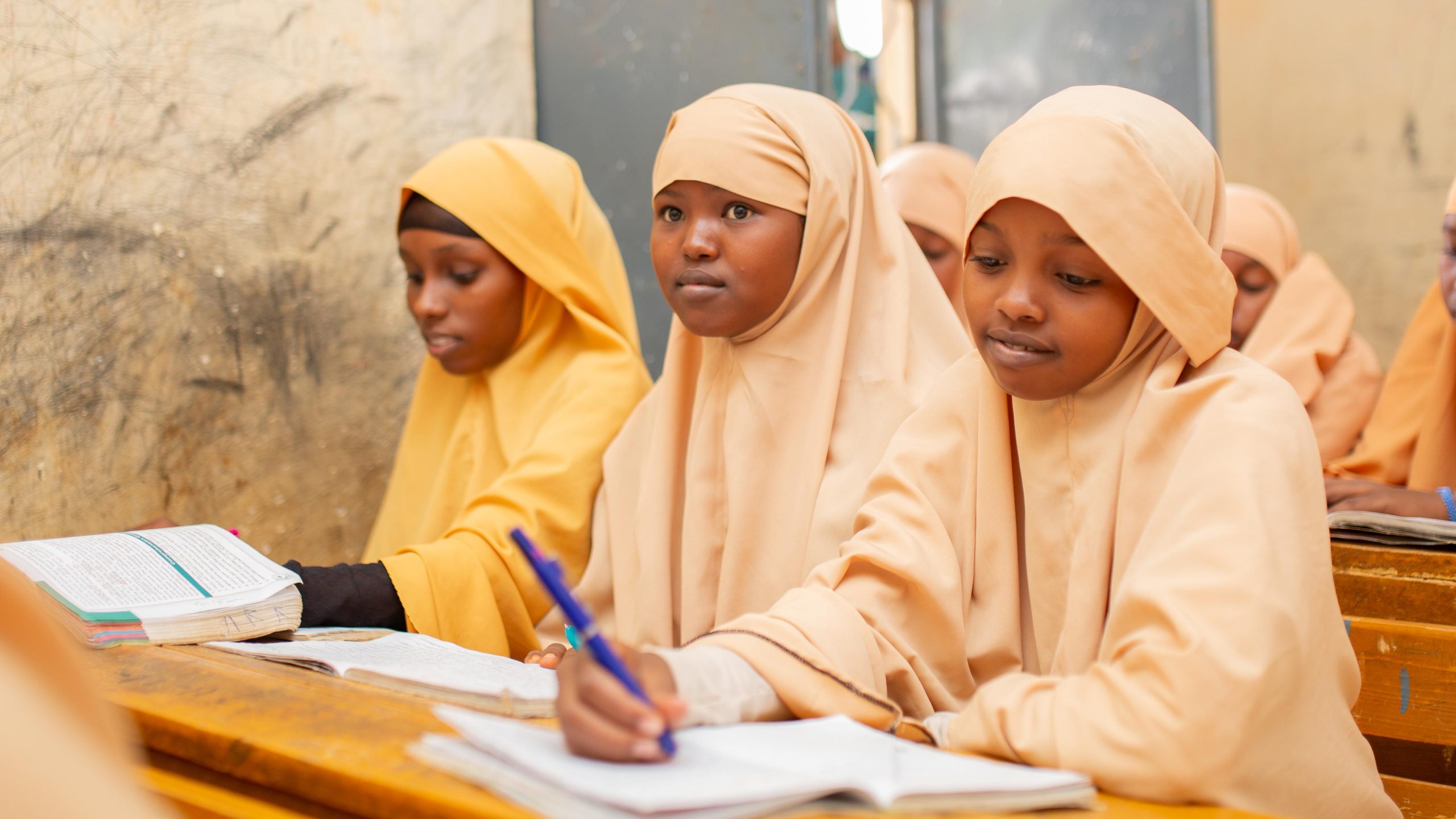
This year, one of our largest projects focuses on providing equitable access to quality and inclusive education. Education shapes far more than individual lives- it strengthens the entire fabric of a community.
Alarmingly, everyday an estimated 250-270 million children and youth worldwide miss school. We cannot ignore this. We cannot forget those children who are missing out on a vital part of ensuring a brighter future. Year after year, wars, conflict, and poverty persist. Each year is another year children who are not in school fall behind, widening the gap between them and the possibilities they deserve. Why not be a part of helping bridge this gap? Let’s help ensure children can access school, no matter where they are because education cannot wait.
Why Somalia?
For over a quarter of a century, Somalia has endured pervasive conflict and profound insecurity. The effects on families and communities is further worsened by environmental issues such as droughts and floods. Displacement, school closures, and economic pressures — including child labour and early marriage — deprive children of their right to education. ‘Over half of school-aged children in Somalia are out of school with many facing compounded challenges. Those that are particularly marginalized include children with disabilities, children from nomadic families, students in poverty from urban areas, refugees, and internally displaced persons (IDPs). These groups are disproportionately affected by climate-related events or conflict due to their existing and emerging vulnerabilities. These children are also impacted by partial or complete school closures, teacher absence and mental health or well-being issues resulting from crises. Even when children remain in school during a crisis, fear and anxiety can make it difficult for them to concentrate and learn effectively’ (MYRP Project Report).
What impact will the project have?
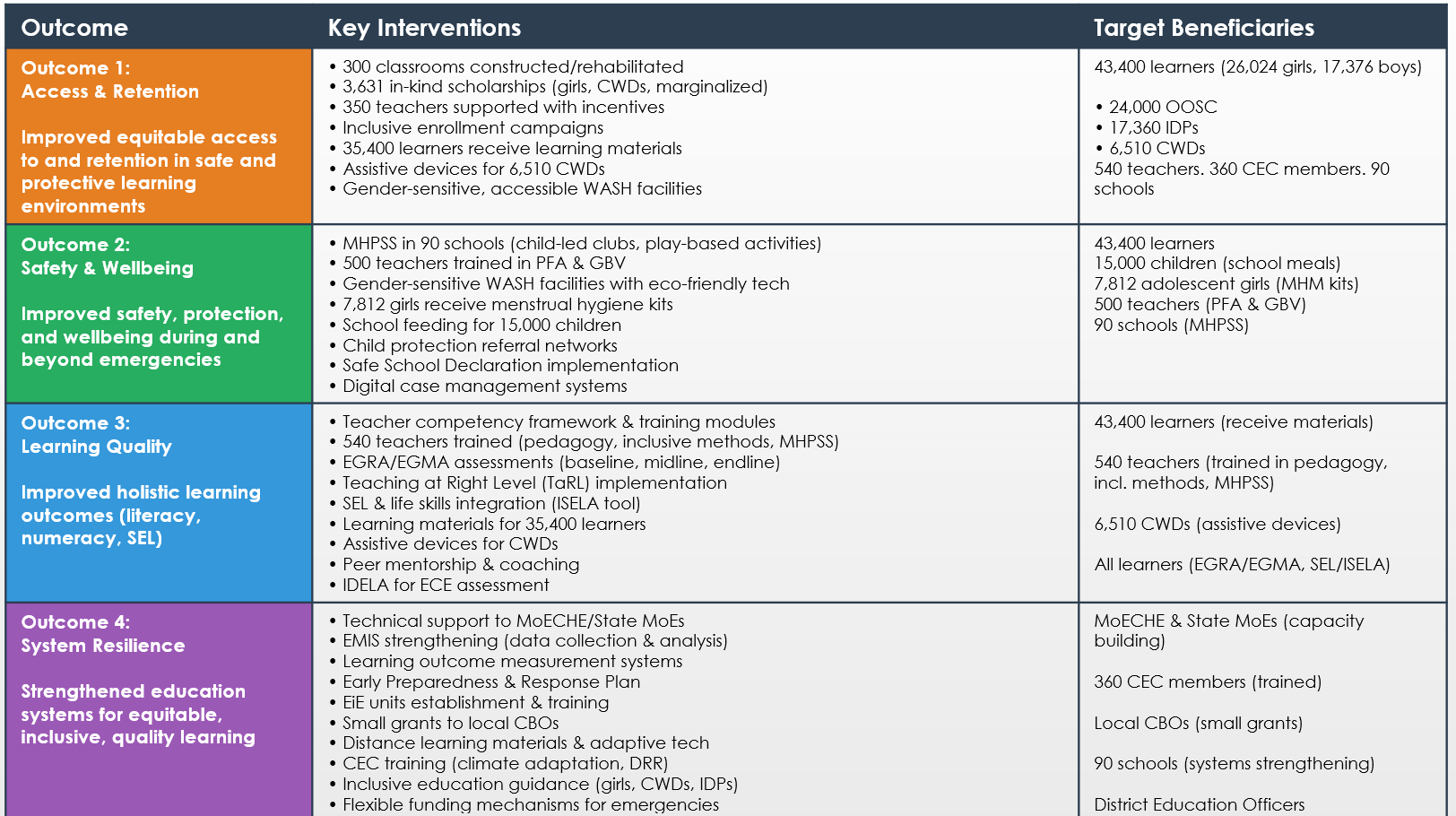
- More children—especially those most affected by crisis, conflict, or disability—can safely access education and stay in school.
- Children are better protected, safer, and supported in their well-being.
- Children in the most difficult circumstances are learning more and achieving better educational outcomes.
- Education systems are stronger and better prepared to provide safe, inclusive, and high-quality learning, even during emergencies.
This project will target:
Out of school children
Teachers
Internally displaced persons
Children with Disabilities
Schools